Monday Night Class took an unexpected break the last few weeks of October. And now, while my studio is undergoing renovation, we’re been rendered homeless. Fortunately, we have Claude and her pristine yoga studio. So we do have a temporary resting place. Needless to say, I’m most grateful for this sanctuary…
As a Taurean being, I’ve never much liked change. Ironically, my life as a yogini has forced me to uproot over and over again. I’ve often suspected this outer movement was required to change my sedentary nature. Left to my own devices I’d probably have never left home…
And now, with my home in the chaos of renovation, I’m thinking a lot about perception, about how we change the world by changing our mind. Baba Muktananda often spoke of this telling us, “the world is as you see it.” People would complain to him about this or that and he’d sit back laughing and say, “change the prescription of your glasses…” I understood what he was saying, but understanding was just the first step. Living this awareness is the ongoing work…
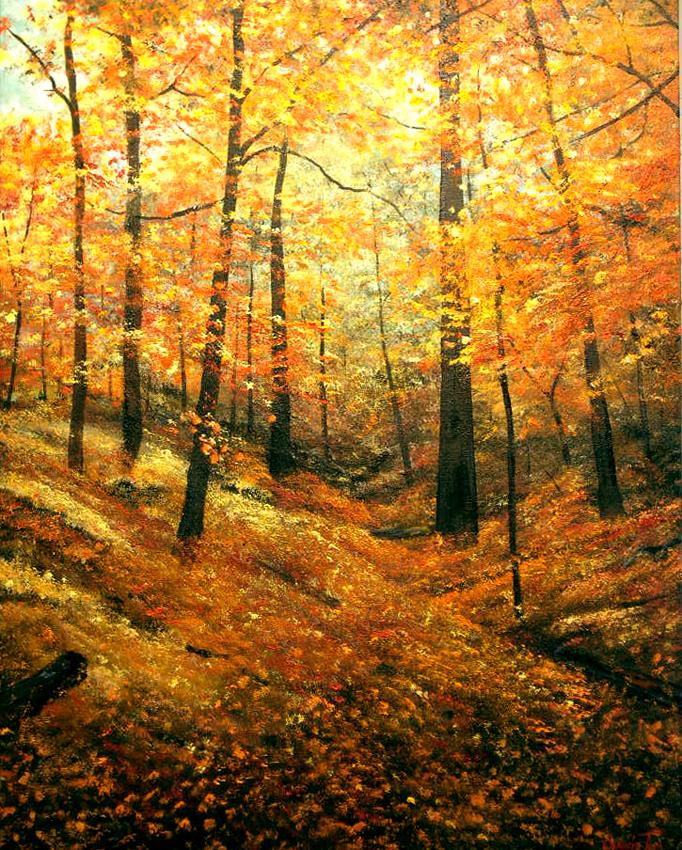
I was out in my yard on Saturday raking leaves. This is a task I’ve never much enjoyed. I tire easily. My lower back aches. The minutes seem like hours. So I began asking myself why and remembered how as a child, I loved playing in the leaves. Same person. Same autumn season. Same leaves. The only difference really is perception. So I thought okay, let this raking be play. And I found myself — or perhaps I should say — lost myself in the leaves. And everything shifted. Fatigue vanished. No back pain. And dare I say it, bliss bubbling up from within…
There’s an interesting piece in this weeks’ NY Times about this phenomenon. Researchers at the University of Kent in England are documenting what yogis have practiced for centuries… we can change the world by changing our mind…
Here’s the lead with a link to the article:
Tell yourself during exercise that you’re not as tired as you think you are and you could make that statement true, a new study shows, reminding us that the body intertwines with the mind in ways that we are only starting to understand.
This week’s class fell on Ganesha Puja so we opened with chanting the Ganesha mantra Vakratunda Mahakaya. Since the sound quality on the class recording is not great, I thought I’d give visitors to this blog a special treat. As many of you know, Daniel and I have been in the recording studio working on an album of mantras and chants. This is a preview clip from our version of Vakratunda Mahakaya, which will be the first track on the CD.Btw, please staytuned for updates on the production of this amazing album. It’s been ten years in the making and well worth the wait. I’m hoping for a December 1 release.
Here’s transliterated Sanskrit text and translation/commentary:
vakratunda mahakāya
suryakoti samaprabha
nirvighnam kuru me deva
sarva kāryeśu sarvada
Oh Lord with twisted trunk and massive form
whose splendor is equal to a billion suns
bless me that no obstacles impede my endeavors
This chant is sung to the form of Ganesha called Vakratunda, who is personified as having five elephant heads with five twisted trunks. The twisted trunks can be understood as metaphors of the spiraling energy of kundalini; also Ganesha is associated with blessing new beginnings, removing obstacles, and guarding the sanctuary of the inner being. So as Vakratunda with five heads, these powers are quintupled!
The word “vakratunda” translates as “vakra” [twisted] and “tunda” [trunk], which got me thinking about the notion of being twisted in or out of alignment. How we can go either way. How great a deep spinal twist feels and conversely, how wretched we make ourselves feel when we get all twisted up in the dramas of daily life. Think greed, desire, and their numerous offspring… and factor in the ego’s tendency to identify [aka twist into] these lovely machinations of mind…
Yoga offers a profound system for transformation of body.mind.spirit. In a way though we can reduce the whole thing down to this simple notion: how to untwist from the twists that yank us out of alignment by twisting back into the spiraling luminosity of the Self.
Here’s this week’s dharma talk, playing on this idea of twisting and untwisting… It runs just over 7 minutes.
Here’s a simple dharana, chanting of Om Namah Shivaya, and a few more words before silent meditation.
I’ve been in end of summer vacation mode which has been lovely for the soul but threw a wrench into my blogging schedule. Rather than stay in chronological order however, I’m posting last week’s class. Which focused on the topic of “Desire.” Desire gets everyone into all sorts of trouble. For those who walk a wisdom path, it’s very good to make friends with this powerful force. We want to get it working for rather than against us.
Here’s my dharma talk which opens with a short breath meditation and ends with a reading from Thomas Byrom’s wonderful translation of Ashtavakra Gita. I’ve titled this post with the final lines from this glorious text…
Here’s the Byrom text:
From The Heart of Awareness: A Translation of Ashtavakra Gita, Thomas Byrom, Shambhala Dragon Editions.
17. Beyond All 1. The man who is happy and pure And likes his own company Gathers the fruit of his practice And the fruit of wisdom. 2. The man who knows the truth is never unhappy in the world. For he alone fills the universe. 3. Just as the elephant loves The leaves of the sallaki tree, But not the neem tree, So the man who loves himself Always spurns the senses. 4. It is hard to find A man who has no desire For what he has not tasted, Or who tastes the world And is untouched. 5. Here in the world Some crave pleasure, Some seek freedom. But it is hard to find A man who wants neither. He is a great soul. 6. It is hard to find A man who has an open mind, Who neither seeks nor shuns Wealth or pleasure, Duty or liberation, Life or death. . . 7. He does not want the world to end. He does not mind if it lasts. Whatever befalls him, He lives in happiness. For he is truly blessed. 8. Now that he understands, He is fulfilled. His mind is drawn within, And he is fulfilled. He sees and he hears, He touches and smells and tastes, And he is happy. 9. What he does is without purpose. His senses have been stilled. His eyes are empty. He is without desire or aversion. For him the waters of the world Have all dried up! 10. He is not asleep. He is not awake. He never closes his eyes. Or opens them. Wherever he is, He is beyond everything. He is free. 11. And the man who is free Always lives in his heart. His heart is always pure. Whatever happens, He is free of all desires. 12. Whatever he sees or hears or touches, Whatever he smells or tastes, Whatever he acquires, He is free. Free from striving, And from stillness. For he is indeed a great soul. 13. Without blame or praise, Anger or rejoicing. He gives nothing. He takes nothing. He wants nothing, Nothing at all. 14. And whoever draws near him, A woman full of passion Or Death Himself, He is not shaken. He stays in his heart. He is free indeed! 15. It is all the same to him. Man or woman, Good fortune or bad, Happiness or sorrow. It makes no difference. He is serene. 16. The world no longer holds him. He has gone beyond The bounds of human nature. Without compassion Or the wish to harm, Without pride or humility. Nothing disturbs him. Nothing surprises him. 17. Because he is free, He neither craves nor disdains The things of the world. He takes them as they come. His mind is always detached. 18. His mind is empty. He is not concerned with meditation, Or the absence of it, Or the struggle between good and evil. He is beyond all, Alone. 19. No “I,” No “mine.” He knows there is nothing. All his inner desires have melted away. Whatever he does, He does nothing. 20. His mind has stopped working! It has simply melted away . . . And with it, Dreams and delusions and dullness. And for what he has become, There is no name.
I tried a new microphone placement this week which alas did not work so well. I’m therefore not including opening chanting from this class. Here however is our final recitation of the Maha Mrtunjaya Mantra resolving into Om Namah Shivaya and a closing dharana. Enjoy…
I’ve been chanting the Maha Mrtunjaya Mantra for many years. Full disclosure: it never really sang to me until now, when I begin to find an inexhaustible depth inside its sonic vehicle. Why does a mantra choose to break open inside us at a certain moment? A riddle worthy of contemplation although I’d sooner chant than puzzle it out. Mantras pulsate with consciousness that is way beyond our normal mind state. They initiate us into their mysteries. We can knock at the door until our knuckles hurt. But there will be no entry until they’re ready to receive us. Sometimes it’s love at first sight. Sometimes a decade or two of practice. As one of my teachers always said, it’s the effort that draws the grace. And there is so much grace in the practice of this mantra….
Along with chanting practice of the Maha Mrtunjaya, this week’s class was inspired by parallel readings from the Christian tradition. Here’s a morsel from the longer excerpt I read from Henri Nouwen’s wonderful book, Discernment: Reading the Signs of Daily Life. He’s writing about a life-changing meeting with Mother Teresa:
Her response startled me. I had expected her to diagnose and discuss my very pressing questions, but I suddenly realized that I had asked questions “from below” and she had given an answer “from above,” pointing me in the direction of divine presence. She knew that even if I better understood my distractions and problems, something else remained: a call to live closer to the heart of God. At first her answer didn’t seem to fit my questions, but then I began to see that her answer came from God’s place of healing and not from my place of complaints. Getting answers to my questions is not the goal of spiritual life. Living in the presence of God is the greater call…
Here’s this week’s dharma talk:
Here’s complete text of the poem from St. John of the Cross’ I Came into the Unknown, [English version by Willis Barnstone]. If you’re reading this before listening to my talk, please note that the word here translated as “science” is perhaps more closely understood as “logic” and/or rational, linear thought.
I came into the unknown and stayed there unknowing rising beyond all science.
I did not know the door but when I found the way, unknowing where I was, I learned enormous things, but what I felt I cannot say, for I remained unknowing, rising beyond all science.
It was the perfect realm of holiness and peace. In deepest solitude I found the narrow way: a secret giving such release that I was stunned and stammering, rising beyond all science.
I was so far inside, so dazed and far away my senses were released from feelings of my own. My mind had found a surer way: a knowledge of unknowing, rising beyond all science.
And he who does arrive collapses as in sleep, for all he knew before now seems a lowly thing, and so his knowledge grows so deep that he remains unknowing, rising beyond all science.
The higher he ascends the darker is the wood; it is the shadowy cloud that clarified the night, and so the one who understood remains always unknowing, rising beyond all science.
This knowledge by unknowing is such a soaring force that scholars argue long but never leave the ground. Their knowledge always fails the source: to understand unknowing, rising beyond all science.
This knowledge is supreme crossing a blazing height; though formal reason tries it crumbles in the dark, but one who would control the night by knowledge of unknowing will rise beyond all science.
And if you wish to hear: the highest science leads to an ecstatic feeling of the most holy Being; and from his mercy comes his deed: to let us stay unknowing, rising beyond all science.
Here’s text from The Cloud of Unknowing:
For He can well be loved, but he cannot be thought. By love he can be grasped and held, but by thought, neither grasped nor held. And therefore, though it may be good at times to think specifically of the kindness and excellence of God, and though this may be a light and a part of contemplation, all the same, in the work of contemplation itself, it must be cast down and covered with a cloud of forgetting. And you must step above it stoutly but deftly, with a devout and delightful stirring of love, and struggle to pierce that darkness above you; and beat on that thick cloud of unknowing with a sharp dart of longing love, and do not give up, whatever happens….
And so I urge you, go after experience rather than knowledge. On account of pride, knowledge may often deceive you, but this gentle, loving affection will not deceive you. Knowledge tends to breed conceit, but love builds. Knowledge is full of labor, but love, full of rest.
Here’s this week’s dharana, a small exercise that plays with shifting back and forth from thinking to witness…
Much as I’d like to include this week’s chanting of the Maha Mrtunjaya Mantra, the recording quality is problematic. So I’ll include a clip from a previous post:
This week’s class wove seemingly disparate elements that are actually deeply connected into a meditation on sitting in the presence of this incredible dance called life… Full disclosure: this talk is somewhat hilarious and irreverent. And, fyi, because my own daily life will soon shift into a much simpler dance, some time in April I should begin tending this blog in ways that have been impossible over the last few years.
For now though, I still need to keep it simple. Here’s my dharma talk from February 25:
You’ll have to listen for Sheik Nasruddin stories. I don’t have time to write them out. Here however, are the poems:
SITTING ZEN David Whyte After three days of sitting hard by the window following grief through the breath like a hunter who has tracked for days the blood spots of his injured prey I came to the lake where the deer had run exhausted refusing to save its life in the dark water and there it fell to ground in our mutual and respectful quiet pierced by the pale diamond edge of the breath’s listening presence.
WHAT I SAID TO THE WANTING-CREATURE Kabir/Bly
I said to the wanting-creature inside me: What is the river you want to cross? There are no travelers on the river-road, and no road. Do you see anyone moving about on that bank, or resting? There is no river at all, and no boat, and no boatman. There is no towrope either, and no one to pull it. There is no ground, no sky, no time, no bank, no ford! And there is no body, and no mind! Do you believe there is some place that will make the soul less thirsty? In that great absence you will find nothing. Be strong then and enter into your own body; there you have a solid place for your feet. Think about it carefully! Don’t go off somewhere else! Kabir says this: just throw away all thoughts of imaginary things. and stand firm in that which you are.
Finally, two clips of chanting. The first is Om Namah Shivaya and a dharana; the second is Sri Krsna Chaitana Prabhu Nityananda.
I’m still reflecting on sweetness and light, and the longing to merge into this luminous honey of the heart. As yogis we want to swim, dare I say, drown there. So I thought we’d open class with the Krsna Govinda kirtan. Here’s a clip of that. The sound quality is not great. I’m including it here because everyone loves this chant. [I’m happy to report I’m getting closer to returning to the studio. I need a few more months for the non-stop drama of my last two years to resolve. Once that happens, I’m looking forward to drowning in this music of my heart.]
And here’s this week’s dharma talk, which runs around 17 minutes. I read from Kabir & Rumi, two drenched souls who knew a thing or two about drowning. All text is posted after the sound clip:
Here’s the Kabir:
The darkness of night is coming along fast, and the shadows of love close in the body and the mind. Open the window to the west, and disappear into the air inside you. Near your breastbone three is an open flower. Drink the honey that is all around that flower. Waves are coming in: there is so much magnificence near the ocean! Listen: Sound of bells! Sound of immense seashells! Kabir says, Friend, listen, this is what I have to say: the One I love is inside of me!
Yes, at the end of the day, it’s all about Love, and our longing, which is actually the connecting thread. Kabir says it far better than I:
Kabir says this: When the Guest is being searched for, it is the intensity of the longing for the Guest that does all the work. Look at me and you will see a slave of that intensity.
Here are the Rumi poems:
1. This being human is a guest house. Every morning a new arrival. A joy, a depression, a meanness, some momentary awareness comes as an unexpected visitor. Welcome and attend them all! Even if they’re a crowd of sorrows, who violently sweep your house empty of its furniture, still, treat each guest honorably. He may be clearing you out for some new delight.
The dark thought, the shame, the malice, meetr them at the door laughing and invite them in. Be grateful for whoever comes, because each has been sent as a guide from beyond.
Welcome difficulty. Learn the alchemy True Human Beings know: the moment you accept what troubles you’ve been given, the door opens.
Welcome difficulty as a familiar comrade. Joke with torment brought by the Friend. Sorrows are the rags of old clothes and jackets that serve to cover, and then are taken off.
That undressing, and the beautiful naked body underneath is the sweetness that comes after grief.
2. One night a man was crying, “Allah! Allah! His lips grew sweet with the praising, until a cynic said, “So I have heard you calling out, but have you ever gotten any response?” The man had no answer to that. He quit praying and fell into a confused sleep. He dreamed he saw Khidr, the guide of souls, in a thick green foliage. “Why did you stop praising?” “Because I’ve never heard anything back.” “This longing you express is the return message.” The grief you cry out from draws you toward union. Your pure sadness that wants help is the secret cup. Listen to the moan of a dog for its master. The whining is the connection. There are love-dogs no one knows the names of.
Give your life to be one of them.
And here’s the quote from Lawrence Kushner’s, The River of Light:
There is a realm of being that comes before us and follows after us. Streaming through and uniting all creation. Knowing who we have been and will be. It contaminates our sleep with visions of higher reality and exalts our waking with stories. It is a river of light. “She is a tree of Life to those who hold onto her.” [Prov. 3:18]. Her branches and shoots are the nerves and vessels of this world coursing beneath our surfaces, pulsing through our veins. A blueprint underlying the cosmos. The primary process of being. The inner structure of consciousness. The way of the Tao. “And all her paths are peace.” [Prov. 3:17]. Just behind and beneath everything. If we could but stand it, everything would have meaning. Everything connected to everything else even as they all share a common Root.
This week’s recording of slow mantra had some technical glitches so I won’t post sound clips. Instead, I dug into my archive of not-yet-posted recordings and chose the first one that jumped out at me. Which was July 25, 2011. This was back in the days when Sri Dan was with us each week so we were singing much more kirtan. This class opened with Jaya Shiva Shankara. There were a lot of new people in the room that night so the recording begins with an introduction to this chant. You’ll hear Sri Dan on tabla. Sweet light. Enjoy.
I’m also including the dharma talk from that week. We were deep into Patanjali, swimming around in Book II. I was so struck by the threads between what we were talking about then and what we’re talking about now, I thought I’d leave the entire talk. Think of it as a bonus feature;) I don’t have time for a careful edit so this is one long 50 minute sound clip. Here’s a rough breakdown: Jaya Shiva Shankara, 0-26; dharma talk, 26-43; and there’s an interesting dharana on Om Namah Shivaya, 43-50. Once you click on the sound file, you’ll see the time and you can click around within the file:
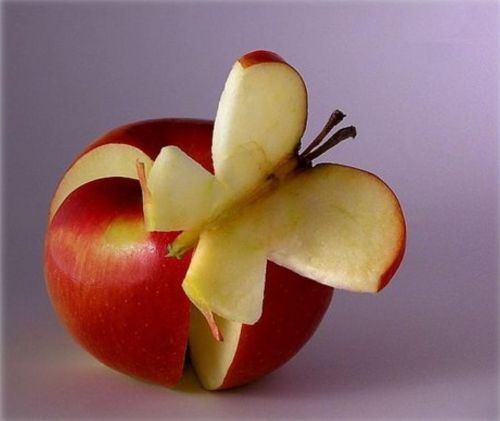
This week’s class fell on Rosh Hashonah, the first day of the Jewish New Year. In Jewish tradition, the first ten days of the year are considered the High Holy Days, the Days of Awe. There’s a sense that over these first ten days we lay the blueprint for the rest of the year. So the suggestion is to spend this time in quiet contemplation, taking stock of how we’ve moved towards the light, and how we’ve moved away. Along with this intensive self-inquiry, it’s traditional to eat apples dipped in honey, a symbolic act for bringing sweetness into our lives.
So I thought it only right to offer this class to sweetness and light…
Hence, I added srim, the Laksmi bija mantra, to last week’s mix of Gayatri and Om Namah Shivaya — andbrought in a group of Hafiz/Landinsky poems and a reading from Lawrence Kushner’s kabbalistic musings, Honey From the Rock.
For visitors unfamiliar with the Laksmi bija mantra, let me say a few things about srim — which I can’t properly transliterate here — fyi, it’s pronounced “shreem.” Srim is a seed mantra meaning it contains the full potency of the deity field. In this case, Laksmi, aka the power of splendor, magnificence, expansiveness, abundance… you get the idea. So the teachings go that whatever Laksmi touches grows into its most magnificent form. And sweetness is one of the attributes of Laksmi. This is a perfect sweetness. Not so sweet as to be cloying or just plain too sweet. This is the perfection of sweetness. The sweetness that makes us feel, well, let me say it like it is, positively delicious. We might say we experience the sweetness of Laksmi as a kind of effervescent grace. When all is right with our lives and infinity is possible…
Before I go on, let me also say a few things about Monday Night Class. There is much I love about this class. Its longevity. The people who find their way there. The depth and power of the teachings and practice. The sense of welcome, safety, and community. Sometimes though, I think what I love best is the sweetness of the laughter. Here’s a clip from this week’s class:
Here’s this week’s dharma talk. Which begins with the below posted Hafiz. This small group of poems offers an excellent teaching on what gets in the way of our ability/intention to live in and of our sweetness and light [and delight!] I’ll post the Kushner quote which I also read in this talk, below Hafiz. Kushner is writing specifically about Light. The two together make an excellent counterpoint on the topic of sweetness and light. Add in the mantras and we have a fugue for the heart…
Here are the Hafiz poems, from Daniel Landinsky’s book, The Gift.
THE SAD GAME,
Blame Keeps the sad game going. It keeps stealing all your wealth – Giving it to an imbecile with No financial skills. Dear one, Wise Up.
TIRED OF SPEAKING SWEETLY
Love wants to reach out and manhandle us, Break all our teacup talk of God. If you had the courage and Could give the Beloved His choice, some nights, He would just drag you around the room By your hair, Ripping from your grip all those toys in the world That bring you no joy. Love sometimes gets tired of speaking sweetly And wants to rip to shreds All your erroneous notions of truth. That make you fight within yourself, dear one, And with others, Causing the world to weep On too many fine days. God wants to manhandle us, Lock us inside of a tiny room with Himself And practice His dropkick. The Beloved sometimes wants To do us a great favor: Hold us upside down And shake all the nonsense out. But when we hear He is in such a “playful drunken mood” Most everyone I know Quickly packs their bags and hightails it Out of town.
DROPPING KEYS
The small man Builds cages for everyone He Knows. While the sage, Who has to duck his head When the moon is low, Keeps dropping keys all night long For the Beautiful Rowdy Prisoners.
FIND A BETTER JOB
Now That All your worry Has proved such an Unlucrative Business, Why Not Find a better Job.
I WISH I COULD SPEAK LIKE MUSIC
I wish I could speak like music. I wish I could put the swaying splendor of the fields into words so that you could hold Truth Against your body And dance. I am trying the best I can With this crude brush, the tongue, To cover you with light. I wish I could speak like divine music. I want to give you the sublime rhythms Of this earth and the sky’s limbs As they joyously spin and surrender, Surrender Against God’s luminous breath. Hafiz wants you to hold me Against your precious Body And dance, Dance.
Here’s the quote from Lawrence Kushner’s Honey from the Rock:
It is no accident that all the great creation tales begin with light. Of all the things that the Creator might have first formed – mountains, waterfalls, stars, flowers, fruited plains, lions and lambs, leviathans and whirlwinds, single-celled creatures and man – He made light. First of all the Holy One fashioned consciousness.
Let us retell the story of this light which is a metaphor for spiritual awareness: A light with which the Holy One began the creation. Let there be light and there was light. In the Zohar we read further of creation. Some kind of dark flame – blinding flash – issued forth from the innermost hiddenness – from the mystery of the Ayn-Sof, the Infinite One…. A light that was so dazzling that by it…man could gaze from one end of the universe to the other. A light so powerful that is shattered earthly vessels. A light that if it fell into the hands of the wicked could return creation itself back to primordial chaos. A light that therefore had to be hidden away. And God made a separation. A light that was set aside for the Tsadikim [the righteous ones]. Light is sown for the righteous… A light whose appearance initiates creation. But it is a creation only able to withstand a tiny bit of light. Therefore the light had to be concealed. And so it is that darkness and incompletion and separation are the price of this world. While light initiates existence, existence conceals light. For with the appearance of the light being began, But with the concealment of the light all manner of individuated existence was created… Just this is the mystery of the work of creation; And one who is able to understand will understand. A light imprisoned in the shards of this created world, waiting for us to free it. Returning itself and us to the Creator. A light so awesome that even a fraction of its splendor – just so much as a ray the thinness of a needle is all any of us need for unimaginable illumination.
Here’s a clip of this week’s chanting. I tried a different microphone placement, hoping to pick up less harmonium, more voices. Alas, I ended up with more harmonium. The call is quite clear, but I’m sorry to say the response is barely audible.
Finally, here’s a clip of the dharana I gave before gliding into silent meditation:
And when the topic is light, the last word goes to Devi, the Shining. This quote is found in the frontpiece of Ajit Mookerjee’s book, Kali, the Feminine Force. He cites Bhairava Yamala as the source text. I’ve never been able to find this text or any verse resembling the quote. A google search brings up nothing definitive. So I’m going to assume that Mookerjee had access to an unpublished text fragment and made this very beautiful translation. Wherever it comes from, whatever its source, it pulsates with sweetness, luminosity, and supreme bliss:
She is Light itself and transcendent.
Emanating from Her body are rays in thousands — two thousand, a hundred thousand, tens of millions, a hundred million — there is no counting their numbers. It is by and through Her that all things moving and motionless shine. It is by the light of this Devi that all things become manifest.
For the first class of the new fall season, it seemed only right to bask in the luminosity of Gayatri mantra. For readers of this blog who do not attend class, here is the mantra in transliterated Sanskrit:
As I wrote in the previous post, Gayatri mantra is considered the sound form of light. So Sanskrit, as a language of vibration, is offering us a sonic vessel of liquid light. Pour it into your bloodstream. Chant it with all your heart. Meaning is secondary, almost irrelevant. Still the mind loves something to dwell on, hence the beautiful imagery of the literal English translation:
Earth. Atmosphere. Heavens. We meditate on the sacred light of the effulgent source. Let that light infuse our entire being.
bhur earth bhuvah atmosphere svaha heavens tat that savitur of the source varenyam to be held sacred bhargo light devasya of the effulgent dhimahi we meditate on dhiyo thoughts, intentions, prayers yah which (source) nah our procadayat should direct, urge, inspire
Here’s a clip of the first round of chanting from this week’s class:
Here’s my dharma talk:
This last clip contains a short dharana to ease into final chanting of the evening: a second round of Gayatri [approximately 26 minutes], followed by Om Namah Shivaya.
And the final word goes to Rumi. Here’s the text I read at class, from Coleman Barks’ & Michael Green’s, The Illuminated Rumi:
In any gathering, in any chance meeting on the street, there is a shine, an elegance rising up
Today, I recognized that the jewel-like beauty is the presence.
Our loving confusion, the glow in which watery clay gets brighter than fire, the one we call the Friend.
I begged, “Is there a way into you, a ladder?” “Your head is the ladder, bring it down under your feet.”
The mind, this globe of awareness, is a starry universe that when you push off with your foot, a thousand new roads become clear, as you yourself do at dawn, sailing through the light.
This week’s class focused on one sutra. I thought the dawning of wisdom deserved an evening unto itself.
III, 5
Once the perfect discipline of consciousness is mastered,
wisdom dawns.
Just to reiterate, Patanjali’s Book III concerns itself with the final three limbs of classical yoga: concentration (dharana), meditation/absorption (dhyana) and integration (samadhi). These three limbs form the perfect discipline of consciousness, aka samyama, referred to in the above sutra.
If you imagine the mind/body system as myriad layers of consciousness, some clear, some dense, some hard, some soft, some open, some closed, some sticky, some slippery — you get where I’m going with this — you can see why it’s so hard to get the whole mess integrated. All this to say the practice of samyama does not come easily. We have to work at it. The mind is a slippery instrument, more often attuned to the kleshas, than its innate wisdom. [Should you want to review the kleshas, go to the May 2011 archive]. Yet wisdom, like the sun, is always blazing. We may be oblivious to its light. That doesn’t mean it’s not here. Which is why taking a moment to turn within can evoke a profound sense of clarity, calm, insight, or wisdom. Of course, Patanjali’s technology for yoking the mind/body system is designed so those moments of clarity, calm, insight, and wisdom stretch into the norm.
This week’s dharma talk attempts to unpack some of the above:
For reasons that will become clear over the next few weeks, I’m feeling a connection between the teachings and practices I’ve come to call the Laksmi Work and our current immersion in Patanjali Book III. More on that as it unfolds. For now, suffice to say we opened class chanting the Laksmi-Murti-Mantra combined with the Dhumavati Bija. I’ll write these mantras out for those unfamiliar with them and also include a clip of the actual chanting:
Here are the mantras:
Here’s an audio clip of the chanting:
Contemplating wisdom inspired me to go down the rabbit hole of parallel teachings:
From the Laksmi Tantra:
I am recognized by the wise as the bliss and tranquility inherent in each state of being. Though that is my true nature, [the individual] does not experience me spontaneously. However, after receiving a mere particle of my anugrahashakti [grace], she discovers me instantaneously…Then after propitiating me by various means [i.e. samyama], the jiva [individual soul] washes away all the kleshas and blows away the dust of impressions; whereby the jiva that has already severed its fetters through meditation, fuses with true knowledge [aka wisdom] and attains me, who am Laksmi and whose nature is supreme bliss.
From the Jneshwari:
What is action? What is inaction? Thus, even the wise are confused in this matter. This action, I shall explain to you, having known which, you shall be released from evil [i.e. the lack of wisdom].
One must know the nature of action, the nature of wrong action, and also the nature of inaction. The way of action is profound.
He who perceives inaction in action, and action is inaction is wise among men; he is is a yogi and performs all actions.
Such a person seems like other people, but he is not affected by human nature like the sun which cannot be drowned in water.
He sees the world without seeing it, does everything without doing it, and enjoys all pleasures without being involved in them.
Though he is seated in one place, he travels everywhere, for even while in the body he has become the universe.
From the Ashtavakra Gita:
1. The wise man knows the Self, And he plays the game of life. But the fool lives in the world Like a beast of burden.
2. The true seeker feels no elation, Even in that exalted state Which Indra and all the gods Unhappily long for.
3. He understands the nature of things. His heart is not smudged By right or wrong, As the sky is not smudged by smoke.
4. He is pure of heart, He knows the whole world is only the Self…
5. Of the four kinds of being… Only the wise man is strong enough To give up desire and aversion.
From Lalleshwari , tr. by Coleman Barks
The soul, like the moon,
is new, and always new again.
And I have seen the ocean continuously creating.
Since I scoured my mind and my body, I too, Lalla, am new, each moment, new.
My teacher told me one thing,
Live in the soul.
When that was so, I began to go naked, and dance.
Trying to be Thoughtful in the First Brights of Dawn -Mary Oliver
I am thinking, or trying to think, about all the imponderables for which we have no answers, yet endless interest all the range of our lives, and it’s
good for the head no doubt to undertake such meditation; Mystery, after all, is God’s other name, and deserves our
considerations surely. But, but — excuse me now, please; it’s morning, heavenly bright, and my irrepressible heart begs me to hurry on into the next exquisite moment.
[w/ humble apologies to MO for this blog template’s refusal to format her poem as written…]
I brought in three short readings to complement tonight’s sutras. Each offers a counterpoint to the sutra. The first, from Lalla goes beautifully with II, 43: As intense discipline burns up impurities, the body and its senses become supremely purified.
The steed called mind roams space, covering one hundred thousand miles in the blink of an eye. He who does not know how to tether it is apt to be battered to death by the inbreath and the outbreath. -Lalla
The second, from Swami Vivekananda has an interesting resonance with II, 44: Self-study deepens communion with one’s personal deity.
If there is any road to Heaven, it is through Hell. Through Hell to Heaven is always the way. When the soul has wrestled with circumstance and has met death, a thousand times death on the way, but nothing daunted has struggled forward again and again and yet again — then the soul comes out as a giant and laughs at the ideal he has been struggling for, because he finds how much greater is he than the ideal. -Swami Vivekananda
The third pairs nicely with II, 45: Through orientation toward the ideal of pure awareness, one can achieve integration.
What stands in the way of course is always the vital ego with its ignorance and the pride of its ignorance and the physical consciousness with its inertia which resents and resists any call to change and its indolence which does not like to take the trouble — finds it more comfortable to go on its own way repeating always the same old movements and, at best, expecting everything to be done for it in some way or at some time. -Sri Aurobindo








 The Monday Night Blog