Needless to say, William Blake is a tough act to follow. Nevertheless, for those who want more, here are 3 additional audio clips from June 9 Class:
Here’s the opening dharana from class on June 9:
My recording of class chanting of the sutras is sub par so I’m not including here. This is a clip about why chanting from text is such a potent practice.
Here’s the group chant of Om Namah Shivaya and the closing of class:
I was a premature baby, born six weeks before term. My lifelong pattern of bypassing the beginning was probably set that day. Here’s how I learned to ski:
My father took me to Davos Mountain in upstate New York, rented me boots and skis and out we went. By the end of the day I was making my way down the mountain without too many falls and quite enjoying myself. Walking back to the lodge we passed the beginner’s slope. I still remember my shock. “Dad,” I said, “Why didn’t you start me here?” “Try it now,” he said. And after a day on the intermediate slopes, the beginner’s run was easy…
And so too with our immersion in Vijnana Bhairava. I initially skipped us over the introductory verses, moving right into the dharanas. While the decision made sense at the time, I began to suspect the impulse was driven by this deep unconscious leapfrog pattern. While I’m not suggesting leapfrogging is always the wrong choice, I would rather not subject Monday Night Class to my unconscious motivation.
We’ve therefore circled back to the beginning of this text. Full disclosure: I’ve always discounted these first verses as a literary device to get the text moving. Devi asks Bhairava to explain the meaning of life and after some and back and forth, the discourse begins.
What I now come to see is that these introductory verses are much more than a literary device. They are setting up the text as a dialogue between that within us that asks the question and that within us that knows the answer.
Our culture places great value on knowing. We’re conditioned to give the “right” answer and many of us feel shame when we get it “wrong.” The answer is somehow more important than the question. I will say that this comes from our fear of the unknown, from our need to “look good,” from a deep and terrifying sense that we are not okay.
The notion that knowing will protect us is a dangerous one. We all see how on its own, knowing is a static state of being. At the individual level, it keeps us stuck in tired old narratives and belief systems. At the collective level, it hardens into oppressive political, religious, cultural, etc. institutions. And what is all of that but a thrust away from what actually is… from the unpredictable, unknowable Mystery in which we are born and live our lives and die back into again and again and again…
It’s quite possible that my father who was an expert skier thought we were on the beginner’s slope. However, I doubt that very much. I think he understood the power of not knowing. I think he took a risk that day, moved by a sense that taking me out on the intermediate slope would push me through any fear-based notion I had of what it is to be a beginning skier. Ironically, by bypassing the beginner’s slope, he broke me into “beginner’s mind.” He allowed me the experience of moving in the wide-open space that the yoga of Vijnana Bhairava is all about.
Beloved and radiant Lord of the space before birth, Revealer of essence Slayer of the ignorance that binds us,
You who in play have created this universe And permeated all forms in it with never-ending truth — I have been wondering…
I have been listening to hymns of creation, Enchanted by the verses, Yet still I am curious.
What is this delight-filled universe Into which we find ourselves born? What is this mysterious awareness Shimmering everywhere within it?
2. I have been listening to the love songs of Form longing for formless. What are these energies Undulating through our bodies, Pulsing us into action? And this “matter” out of which our forms are made – What are these dancing particles of condensed radiance?
3. The Goddess then asks, What is this power we call Life, Appearing as the play of flesh and breath? How may I know this mystery and enter it more deeply? Beloved, my attention is ensnared by a myriad of forms, Innumerable individual entities everywhere. Lead me into the wholeness beyond all these parts. You who hold the mysteries in your hand – Of will, knowledge, and action, Reveal to me the path of illumined knowing. Lead me into joyous union With the life of the universe. Teach me that I may know it fully, Realize it deeply, And breathe in luminous truth.
Regular visitors to this blog know I like to bring in parallel readings to whatever text we’re wandering through. This is an excerpt from, Resurrecting Jesus: Embodying the Spirit of a Revolutionary Mystic, by Adyashanti, reprinted in the Summer 2014 issue of Parabola Magazine. The article is titled, The Mystery of The Resurrection. Adyashanti is writing about the version of the story as told in the Gospel of Mark.
Of course, Mark always goes for the surprise; he turns corners in his storytelling you don’t expect, and that is the beauty of Mark. Mark doesn’t always read eloquently; he’s not a poet like the writer of John’s gospel. He’s more interested in exploring the unexpected shifts and turns of the story, and I think he does this because it opens the mind and heart to the mysteriousness of life. When we keep reading things that are unexpected, and encountering scenes that sometimes end almost before they’ve begun, it leaves us in a mysterious state of being. And I think this state of openness is where the writer of the Gospel of Mark wanted to leave us. This is the state in which we can recognize the radiance and, when we’re open and caught off guard by the winds of spirit, we can be transformed into its shining.
When SUNY Press reissued Jaideva Singh’s English translation of Vijnana Bhairava, they gave it the title, The Yoga of Delight, Wonder, and Astonishment. And that’s it right there. Wonder, astonishment, and delight. It’s enough to begin with contemplating the possibility of living in this space, of living in this spaciousness.
We tend to ascribe the so-called positive emotions — feelings of love, joy, contentment — to words like “delight” and “wonder.” Alas, this leaves out the other half of the experience of being human. I think it’s crucial to understand that as we practice living, breathing, perceiving, from the mysterious space between, what we might call the Heart Space, whatever is arising from our feeling-body, so-called positive or negative emotion, is held. That’s the paradox. We are so huge we can hold it all and in that holding, as Adyashanti writes, we are transformed.
I had a glimpse of this at my very first yogic meditation retreat. In those days my musical life was focused on improvisational piano. Much of the music that came through me was melodic and lyrical, beautiful, pleasing, acceptable. There was this whole other music that was wild and dissonant, dark, loud, crashing. There was nothing beautiful or acceptable about it. Yet when I was in this music, I felt a deep sense of power and aliveness. These were the early years of my journey. I had no way of holding what was happening to me. Mostly I kept it secret, shrouded in confusion and shame.
So here I am. It’s the third day of a euphoric experience. I’ve found my path, my practice, my guru. All is right with the world until the afternoon meditation session when I find myself lost in a maelstrom of doubt and self-loathing. Then comes the question, “What is wrong with me? I just want to make beautiful music. What is this terrible music I can’t stop playing?” And then I hear the voice. “Your music is my music. It is the music of the Earth. It is the music of crashing waves and thunderstorms, of sun and moon, of dark and light. Let it all sing through you. Let it all be one.”
Although my blogging has come to a standstill over the last six months, Monday Night Class continues in its brick and mortar form. This Spring we began working through the Shaivite text Vijnana Bhairava (Divine Consciousness.) I first encountered this text during my years in Siddha Yoga. In those days the only available English translations were Paul Reps’ minimalist add-on at the end of Zen Flesh, Zen Bones and Jaideva Singh’s scholarly version, Divine Consciousness, reissued by SUNY Press as The Yoga of Delight, Wonder, and Astonishment. A perfect title for this amazing work now available in a new translation, The Radiance Sutras, by Lorin Roche.
Where Singh explores the philosophical labyrinth of the text, Roche is steeped in the experiential. While hard core scholars may be less than enthusiastic about his approach, I have to say that overall I find it inspired, respectful, and pulsating with luminosity.
Roche’s version has therefore become our main reference, fleshed out with commentary from Singh and whatever parallel readings come my way…
A few points about Vijnana Bhairava:
This is a work of Tantric Shaivism.
In this system, Bhairava is the metaphor for Divine or Supreme or Ultimate Consciousness. The text unfolds as a dialogue between Bhairava and “his” beloved, Paradevi or Bhairavi. This is a literary device. The commentaries make it clear that Bhairava and Bhairavi are one unified field.
Bhairavi is the shakti of Bhairava. Just as there is no difference between fire and its power of burning, even so there is no difference between Bhairava and Paradevi. [Singh, introduction, p. xxviii]
The entire text spans only 163 verses or sutras. Verses 1-23 prepare the ground for the experiential teachings that begin with sutra 24. These are exquisite practices [aka dharanas] designed to break the mind wide open so it rests in its true nature which is Bhairava/Bhairavi, aka the Great Heart, aka Supreme Consciousness, aka the inner Self, aka wonder, astonishment, and delight…
Around the time I decided to bring Vijnana Bhairava to class, I came across this poem. It struck me as a perfect blessing for embarking on a journey through this (or any) sacred text…
Every day, priests minutely examine the Law And endlessly chant complicated sutras. Before doing that, though, they should learn How to read the love letters sent by the wind and rain, the snow and moon.
-Ikkyu (Ikkyu Sojun), English version by Sonya Arutze
In the circular spirit that pervades Monday Night Class, i.e. no clear beginning, middle or end, I will end this post with the 24th verse in Roche’s translation. Fyi, this is actually the 47th sutra; Roche’s numbering begins with the actual dharanas.
This body is made of earth and gold, Sky and stars, river and oceans, Masquerading as muscle and bone, Every substance is here: Diamonds and silver, magical elixirs, Ambrosia that gives visions. Herbs that nourish and heal. The foundation of the planet, Immortal magnetic iron, Circulating in the blood. Every element in you loves the others: Earth loves rain, sky loves sun, Sun loves the space it shines through. Space loves everyone equally. In meditation, be drenched in knowing This deep and simple truth. Every cell is an organ of sense Saturated with freedom.
* Regular visitors to this site may wonder why my blogging seemed to stop. This was mostly due to the all-consuming demands of my new music release, Daughter of the Mountain. Along with that however, editing class audio is extremely time-consuming. So, in order to get back to regular blogging, I’ll no longer include audio clips with each post.
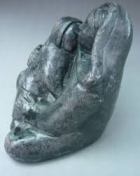
I woke up Monday morning hearing the words “warming the stone child…” I remembered this is a title from Clarissa Pinkola Estes’ canon although did not recall the story. The image however is so evocative, I sat with it awhile, reflecting on winter and the stone cold darkness, on the longing for warmth and nurture, on how nothing warms the stone child like the blazing fire of the heart…
The other phrase I kept hearing was “sonic hydration.” Which struck me as the other medicine the stone child sorely needs. Heart fire and heart hydration. And we all know the quickest route to these is chanting the Name…
I found a transcription of CPE’s telling of Warming the Stone Child online so was able to read it at class and will also post it here. It’s a beautiful version of this Inuit tale and as I said at class, who knows better how to thrive in the long dark cold of winter but people of the Artic.
Like all great wisdom tales, it transcends time and place and can be felt through myriad lenses of perception. For people on a yogic path, it has a lot to say about clinging to form, about surrender, about the awesome power of tears shed from the depths of suffering—about how everything we search for is within….
It reminds me of the Mirabai poem, The Heat of Midnight Tears which I also read at class. All this in the dharma talk audio clip below.
Here’s the story and the poem:
The Stone Child: An Inuit Story told by Clarissa Pinkola Estes
There was an orphan that was so lonely and so hungry that no one wanted to be near him. His mouth was open all the time and his teeth were always showing and tears were always running down from his eyes, and he was so wild with hunger that they had to tie him in the entrance to one of the skin houses so he’d not try to eat the hunters on their way to the seal hunt; that’s how hungry he was.
They would, on occasion, leave him some rancid reindeer meat or maybe some spoiled intestines to eat, but, as we know, it was more than hunger that was gnawing at him. Those deep needs that not even the person themselves understands. So everyday he stretched his chain a little bit and a little bit more, until he could get near a stone that was more or less the same size as himself. You see, his mother and father had died one night, and their bodies had been dragged off by bears, and all that had been left behind by them was this one particular stone. So he wrapped both his arms and his legs around that rock and he wouldn’t let go of it. And, of course, his people thought he was crazier than ever, and on their way home from the hunt, with animal carcasses slung over their shoulders, they would jeer at him, and they would say, “Analuk has taken a stone for a wife, ha ha. It’s good for you to have a wife who is a stone, for then you cannot use your hunger and eat her.” And they went on their way.
But the boy was so lonely and so hungry that he really had reached the end of his feeling for life. And even though he had that terrible loneliness and that gnawing hunger, he kept his body wrapped around that stone, and because the stone began to take the heat from his flesh, the boy began to die. The stone took the heat from his hands, and then it took the heat from his thighs, and it even took the heat from his chin where he rested it on top of the stone.
And just as the boy was living his last breath, the hunters of his village came by again on their way home from the hunt, and again they called him down, and they said, “You crazy boy! You are nesting with that stone like it is an egg. We should call you Bird Boy, you good-for-nothing creature.” And because the boy was near death, his feelings were hurt more than he could ever say, and great icy tears began to roll down his face and across his parka, and his cold, cold tears hit the hot, hot stone with a sizzle and a hiss and a crack, and it broke the stone right in two.
And inside was the most perfect little female the boy could ever want. “Come,” she said, “I am here now, and you are an orphan no more.” And she gave him a bow and arrows and a harpoon she had brought with her, and the boy and the girl made their house and had babies. And, if they are not yet dead, they are in that land where the snow is violet and the night sky is black. They are there, living still.
The Heat of Midnight Tears Mirabai, English version by Robert Bly
Listen, my friend, this road is the heart opening, Kissing his feet, resistance broken, tears all night.
If we could reach the Lord through immersion in water, I would have asked to be born a fish in this life. If we could reach Him through nothing but berries and wild nuts, Then surely the saints would have been monkeys when they came from the womb! If we could reach him by munching lettuce and dry leaves, Then the goats would surely go to the Holy One before us!
If the worship of stone statues could bring us all the way, I would have adored a granite mountain years ago.
Mirabai says: The heat of midnight tears will bring you to God.
One point I did not get to in this week’s dharma talk is the perfect ending of the Stone Child story: ” They are there, living still…” Living still. Such a beautiful evocation of the eternal stillness of the present moment. Reminds me of the opening sutras of Patanjali:
1.1 Atha yogānushāsanam
1.2 Yogah chitta vritti nirodhaha
1.3 Tadā drashtu svarupe avasthānam
Now, in this moment, the study of Yoga, which is the stilling of the thought waves of the mind; and in that stillness we rest in our essential nature.
I’ve walked this path now for nearly forty years and for me, chanting Om Namah Shivaya feels as fresh and alive as that very first time…Every repetition bathing me in sonic hydration, warming me from the inside, breaking open the stone child barriers in heart and mind so I merge, over and over, with the tender magnificence of the Self.
Here in central NJ I’m watching the snow come down. Looks like we have a good ten inches or more. Startling to gaze at this east coast winter wonderland and realize it’s sunny and warm on the west coast and there’s a heat wave in Australia. To those readers in places with more serious blizzard conditions than we’re having here, I wish you warmth, safety, and the good fortune to be able to stay indoors until you choose to venture out…. To those facing the opposite weather extremes, I wish you cooling breezes and gentle rain. Weather extremes notwithstanding, I wish everyone a good beginning to 2014.
suzingreen.com It’s been an auspicious start for me. January 1, my new album and website both went live. These have been major projects and what a joy to see them launch. Please visit the website — http://www.suzingreen.com — we’re still fine tuning but the basics are there.
The Mantra Project, Vol. I: Daughter of the MountainPlease click the tab at the top of this blog for details about this new release. Of course we’d love you to buy copies and/or download tracks, but you can also listen for free through the wonders of Sound Cloud and Spotify. Please help us get this music out to the world. Reviews on iTunes and CD Baby along with shout-outs on FB and Twitter are most appreciated.
Finally, to regular [and new] visitors to this blog, let me say I’m keenly aware that posting has been erratic bordering on remiss. It’s been impossible to stay current here while working on the new album and writing content for the website. Plus, we started a major house-painting project in October so I’ve been living and working in a semi-construction zone since then. I do record class every week so there’s quite a lot of material to post here. I’m truly looking forward to things settling down and being able to get back to some semblance of regular blogging. For now, I thank you for your enduring patience and ongoing support of my work.
Monday Night Class took an unexpected break the last few weeks of October. And now, while my studio is undergoing renovation, we’re been rendered homeless. Fortunately, we have Claude and her pristine yoga studio. So we do have a temporary resting place. Needless to say, I’m most grateful for this sanctuary…
As a Taurean being, I’ve never much liked change. Ironically, my life as a yogini has forced me to uproot over and over again. I’ve often suspected this outer movement was required to change my sedentary nature. Left to my own devices I’d probably have never left home…
And now, with my home in the chaos of renovation, I’m thinking a lot about perception, about how we change the world by changing our mind. Baba Muktananda often spoke of this telling us, “the world is as you see it.” People would complain to him about this or that and he’d sit back laughing and say, “change the prescription of your glasses…” I understood what he was saying, but understanding was just the first step. Living this awareness is the ongoing work…
I was out in my yard on Saturday raking leaves. This is a task I’ve never much enjoyed. I tire easily. My lower back aches. The minutes seem like hours. So I began asking myself why and remembered how as a child, I loved playing in the leaves. Same person. Same autumn season. Same leaves. The only difference really is perception. So I thought okay, let this raking be play. And I found myself — or perhaps I should say — lost myself in the leaves. And everything shifted. Fatigue vanished. No back pain. And dare I say it, bliss bubbling up from within…
There’s an interesting piece in this weeks’ NY Times about this phenomenon. Researchers at the University of Kent in England are documenting what yogis have practiced for centuries… we can change the world by changing our mind…
Here’s the lead with a link to the article:
Tell yourself during exercise that you’re not as tired as you think you are and you could make that statement true, a new study shows, reminding us that the body intertwines with the mind in ways that we are only starting to understand.
This week’s class shook up my long-time format of dharma talk at the beginning and silent meditation at the end. This change was not intended. I was simply going with the flow of the śaktī. While the notion of going with the flow has become a cliche, still, there’s a lot of truth to it. Attending to the present moment is always more interesting than being stuck in past or future whatever. Of course we have to be willing to risk leaving the known. And everything that encompasses. Easier said than done and why practice practice practice is essential…
Here’s the opening dharana for this class. Which runs around 7 minutes and uses the metaphor of river to inspire silent meditation.
The sound quality on this week’s recording of class chanting Om Namah Shivaya is not great. Instead of posting that, I thought I’d make a small recording of me chanting solo. This will be easier on your ears.
Were I to give this week’s dharma talk a title, I’d call it “Operating Instructions for Consciousness.” It runs around 15 minutes, explores ways of working with thought and emotion, and reaffirms why chanting is a profound vehicle for awakening. This description makes it all sound rather dry and predictable. Which, heaven forbid, it most assuredly is not! If you hear bells jingling, you’re not imagining it. That’s my cat coming into the room…
I’ve recently discovered the poetry of Lorri Neilson Glenn. I did not read this poem at class but am moved to end this post with a short excerpt:
….
Listen,
nothing lasts. Quiet can be stolen like your bag
in the street. You will soon be awake in all the wrong places,
your words snatched out of time. Oblivion is a wise
old teacher: there is no try. It’s all right. You didn’t get it
until this moment, did you? Wake every chance you can, join
the chorus, praise the wild. Carry, light…
from Wild, by Lorri Neilson Glenn, from her collection, Lost Gospels, published by Brick Books, 2010.
This week’s class fell on Ganesha Puja so we opened with chanting the Ganesha mantra Vakratunda Mahakaya. Since the sound quality on the class recording is not great, I thought I’d give visitors to this blog a special treat. As many of you know, Daniel and I have been in the recording studio working on an album of mantras and chants. This is a preview clip from our version of Vakratunda Mahakaya, which will be the first track on the CD.Btw, please staytuned for updates on the production of this amazing album. It’s been ten years in the making and well worth the wait. I’m hoping for a December 1 release.
Here’s transliterated Sanskrit text and translation/commentary:
vakratunda mahakāya
suryakoti samaprabha
nirvighnam kuru me deva
sarva kāryeśu sarvada
Oh Lord with twisted trunk and massive form
whose splendor is equal to a billion suns
bless me that no obstacles impede my endeavors
This chant is sung to the form of Ganesha called Vakratunda, who is personified as having five elephant heads with five twisted trunks. The twisted trunks can be understood as metaphors of the spiraling energy of kundalini; also Ganesha is associated with blessing new beginnings, removing obstacles, and guarding the sanctuary of the inner being. So as Vakratunda with five heads, these powers are quintupled!
The word “vakratunda” translates as “vakra” [twisted] and “tunda” [trunk], which got me thinking about the notion of being twisted in or out of alignment. How we can go either way. How great a deep spinal twist feels and conversely, how wretched we make ourselves feel when we get all twisted up in the dramas of daily life. Think greed, desire, and their numerous offspring… and factor in the ego’s tendency to identify [aka twist into] these lovely machinations of mind…
Yoga offers a profound system for transformation of body.mind.spirit. In a way though we can reduce the whole thing down to this simple notion: how to untwist from the twists that yank us out of alignment by twisting back into the spiraling luminosity of the Self.
Here’s this week’s dharma talk, playing on this idea of twisting and untwisting… It runs just over 7 minutes.
Here’s a simple dharana, chanting of Om Namah Shivaya, and a few more words before silent meditation.
I’ve been in end of summer vacation mode which has been lovely for the soul but threw a wrench into my blogging schedule. Rather than stay in chronological order however, I’m posting last week’s class. Which focused on the topic of “Desire.” Desire gets everyone into all sorts of trouble. For those who walk a wisdom path, it’s very good to make friends with this powerful force. We want to get it working for rather than against us.
Here’s my dharma talk which opens with a short breath meditation and ends with a reading from Thomas Byrom’s wonderful translation of Ashtavakra Gita. I’ve titled this post with the final lines from this glorious text…
Here’s the Byrom text:
From The Heart of Awareness: A Translation of Ashtavakra Gita, Thomas Byrom, Shambhala Dragon Editions.
17. Beyond All 1. The man who is happy and pure And likes his own company Gathers the fruit of his practice And the fruit of wisdom. 2. The man who knows the truth is never unhappy in the world. For he alone fills the universe. 3. Just as the elephant loves The leaves of the sallaki tree, But not the neem tree, So the man who loves himself Always spurns the senses. 4. It is hard to find A man who has no desire For what he has not tasted, Or who tastes the world And is untouched. 5. Here in the world Some crave pleasure, Some seek freedom. But it is hard to find A man who wants neither. He is a great soul. 6. It is hard to find A man who has an open mind, Who neither seeks nor shuns Wealth or pleasure, Duty or liberation, Life or death. . . 7. He does not want the world to end. He does not mind if it lasts. Whatever befalls him, He lives in happiness. For he is truly blessed. 8. Now that he understands, He is fulfilled. His mind is drawn within, And he is fulfilled. He sees and he hears, He touches and smells and tastes, And he is happy. 9. What he does is without purpose. His senses have been stilled. His eyes are empty. He is without desire or aversion. For him the waters of the world Have all dried up! 10. He is not asleep. He is not awake. He never closes his eyes. Or opens them. Wherever he is, He is beyond everything. He is free. 11. And the man who is free Always lives in his heart. His heart is always pure. Whatever happens, He is free of all desires. 12. Whatever he sees or hears or touches, Whatever he smells or tastes, Whatever he acquires, He is free. Free from striving, And from stillness. For he is indeed a great soul. 13. Without blame or praise, Anger or rejoicing. He gives nothing. He takes nothing. He wants nothing, Nothing at all. 14. And whoever draws near him, A woman full of passion Or Death Himself, He is not shaken. He stays in his heart. He is free indeed! 15. It is all the same to him. Man or woman, Good fortune or bad, Happiness or sorrow. It makes no difference. He is serene. 16. The world no longer holds him. He has gone beyond The bounds of human nature. Without compassion Or the wish to harm, Without pride or humility. Nothing disturbs him. Nothing surprises him. 17. Because he is free, He neither craves nor disdains The things of the world. He takes them as they come. His mind is always detached. 18. His mind is empty. He is not concerned with meditation, Or the absence of it, Or the struggle between good and evil. He is beyond all, Alone. 19. No “I,” No “mine.” He knows there is nothing. All his inner desires have melted away. Whatever he does, He does nothing. 20. His mind has stopped working! It has simply melted away . . . And with it, Dreams and delusions and dullness. And for what he has become, There is no name.
I tried a new microphone placement this week which alas did not work so well. I’m therefore not including opening chanting from this class. Here however is our final recitation of the Maha Mrtunjaya Mantra resolving into Om Namah Shivaya and a closing dharana. Enjoy…
I’ve been chanting the Maha Mrtunjaya Mantra for many years. Full disclosure: it never really sang to me until now, when I begin to find an inexhaustible depth inside its sonic vehicle. Why does a mantra choose to break open inside us at a certain moment? A riddle worthy of contemplation although I’d sooner chant than puzzle it out. Mantras pulsate with consciousness that is way beyond our normal mind state. They initiate us into their mysteries. We can knock at the door until our knuckles hurt. But there will be no entry until they’re ready to receive us. Sometimes it’s love at first sight. Sometimes a decade or two of practice. As one of my teachers always said, it’s the effort that draws the grace. And there is so much grace in the practice of this mantra….
Along with chanting practice of the Maha Mrtunjaya, this week’s class was inspired by parallel readings from the Christian tradition. Here’s a morsel from the longer excerpt I read from Henri Nouwen’s wonderful book, Discernment: Reading the Signs of Daily Life. He’s writing about a life-changing meeting with Mother Teresa:
Her response startled me. I had expected her to diagnose and discuss my very pressing questions, but I suddenly realized that I had asked questions “from below” and she had given an answer “from above,” pointing me in the direction of divine presence. She knew that even if I better understood my distractions and problems, something else remained: a call to live closer to the heart of God. At first her answer didn’t seem to fit my questions, but then I began to see that her answer came from God’s place of healing and not from my place of complaints. Getting answers to my questions is not the goal of spiritual life. Living in the presence of God is the greater call…
Here’s this week’s dharma talk:
Here’s complete text of the poem from St. John of the Cross’ I Came into the Unknown, [English version by Willis Barnstone]. If you’re reading this before listening to my talk, please note that the word here translated as “science” is perhaps more closely understood as “logic” and/or rational, linear thought.
I came into the unknown and stayed there unknowing rising beyond all science.
I did not know the door but when I found the way, unknowing where I was, I learned enormous things, but what I felt I cannot say, for I remained unknowing, rising beyond all science.
It was the perfect realm of holiness and peace. In deepest solitude I found the narrow way: a secret giving such release that I was stunned and stammering, rising beyond all science.
I was so far inside, so dazed and far away my senses were released from feelings of my own. My mind had found a surer way: a knowledge of unknowing, rising beyond all science.
And he who does arrive collapses as in sleep, for all he knew before now seems a lowly thing, and so his knowledge grows so deep that he remains unknowing, rising beyond all science.
The higher he ascends the darker is the wood; it is the shadowy cloud that clarified the night, and so the one who understood remains always unknowing, rising beyond all science.
This knowledge by unknowing is such a soaring force that scholars argue long but never leave the ground. Their knowledge always fails the source: to understand unknowing, rising beyond all science.
This knowledge is supreme crossing a blazing height; though formal reason tries it crumbles in the dark, but one who would control the night by knowledge of unknowing will rise beyond all science.
And if you wish to hear: the highest science leads to an ecstatic feeling of the most holy Being; and from his mercy comes his deed: to let us stay unknowing, rising beyond all science.
Here’s text from The Cloud of Unknowing:
For He can well be loved, but he cannot be thought. By love he can be grasped and held, but by thought, neither grasped nor held. And therefore, though it may be good at times to think specifically of the kindness and excellence of God, and though this may be a light and a part of contemplation, all the same, in the work of contemplation itself, it must be cast down and covered with a cloud of forgetting. And you must step above it stoutly but deftly, with a devout and delightful stirring of love, and struggle to pierce that darkness above you; and beat on that thick cloud of unknowing with a sharp dart of longing love, and do not give up, whatever happens….
And so I urge you, go after experience rather than knowledge. On account of pride, knowledge may often deceive you, but this gentle, loving affection will not deceive you. Knowledge tends to breed conceit, but love builds. Knowledge is full of labor, but love, full of rest.
Here’s this week’s dharana, a small exercise that plays with shifting back and forth from thinking to witness…
Much as I’d like to include this week’s chanting of the Maha Mrtunjaya Mantra, the recording quality is problematic. So I’ll include a clip from a previous post:


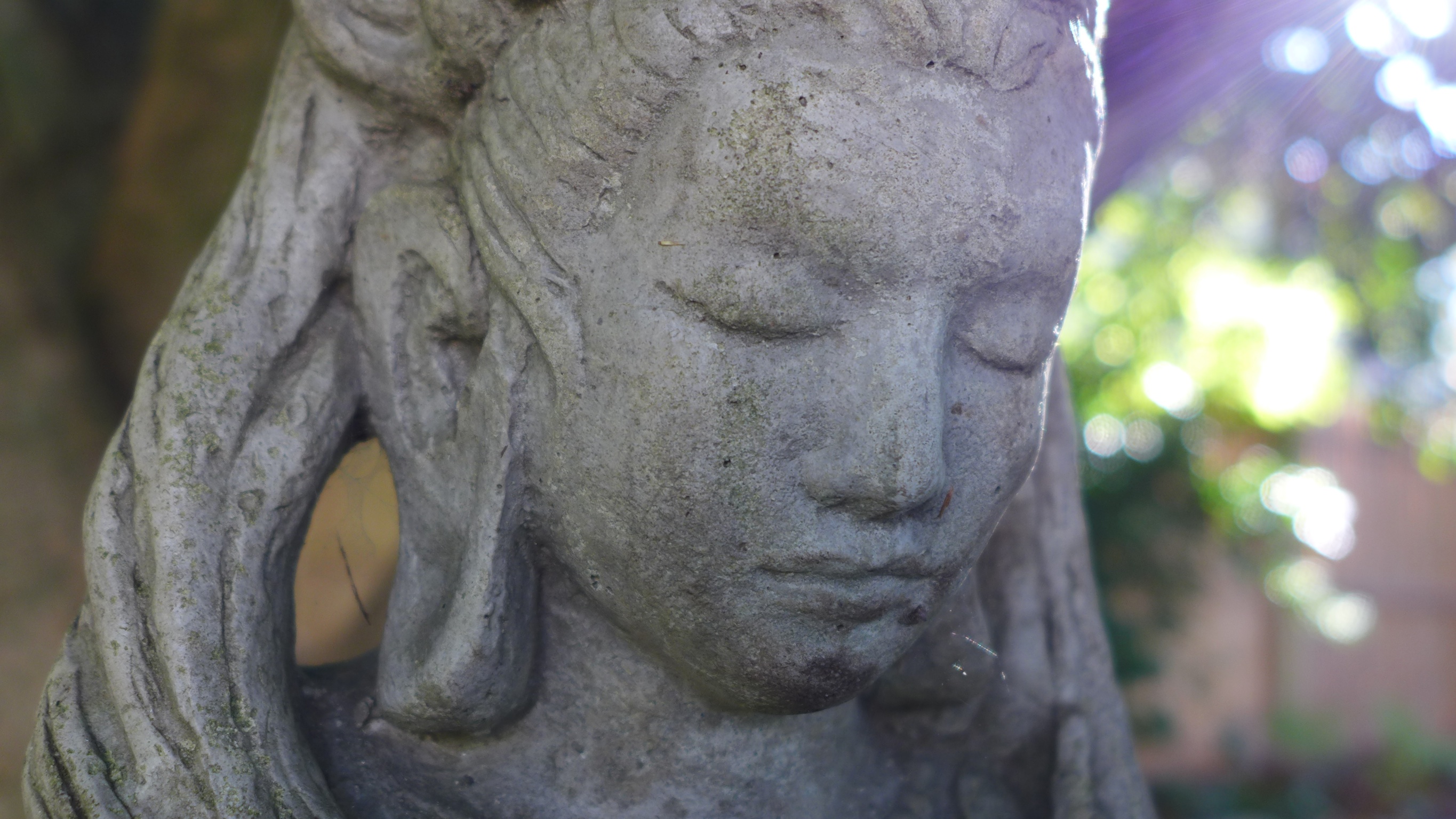
 The Mantra Project, Vol. I: Daughter of the Mountain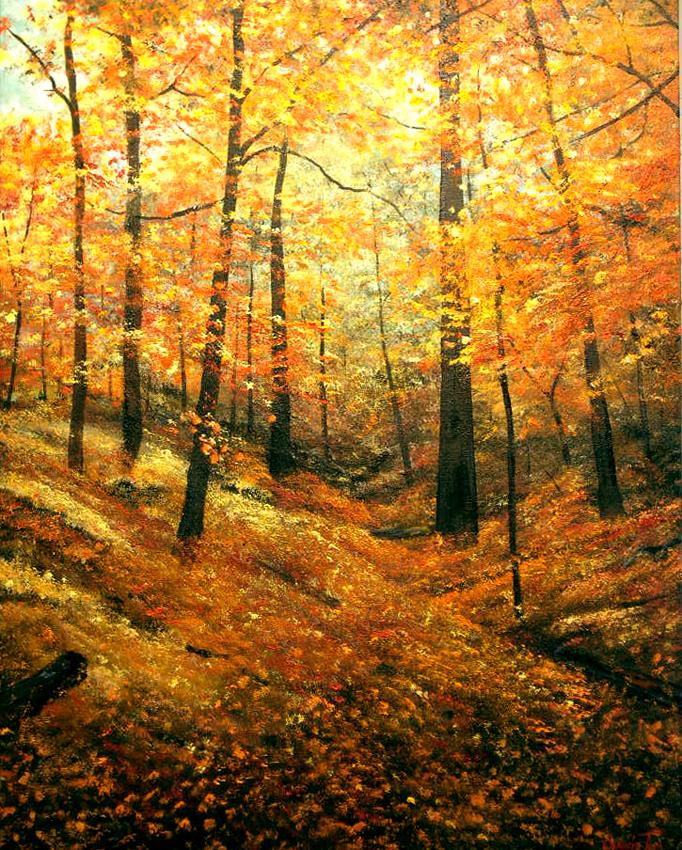


 The Monday Night Blog